Finley Lang · 7 September 2026
Shifts in Algorithm Updates Reshaping Traffic Patterns for Niche Content Platforms
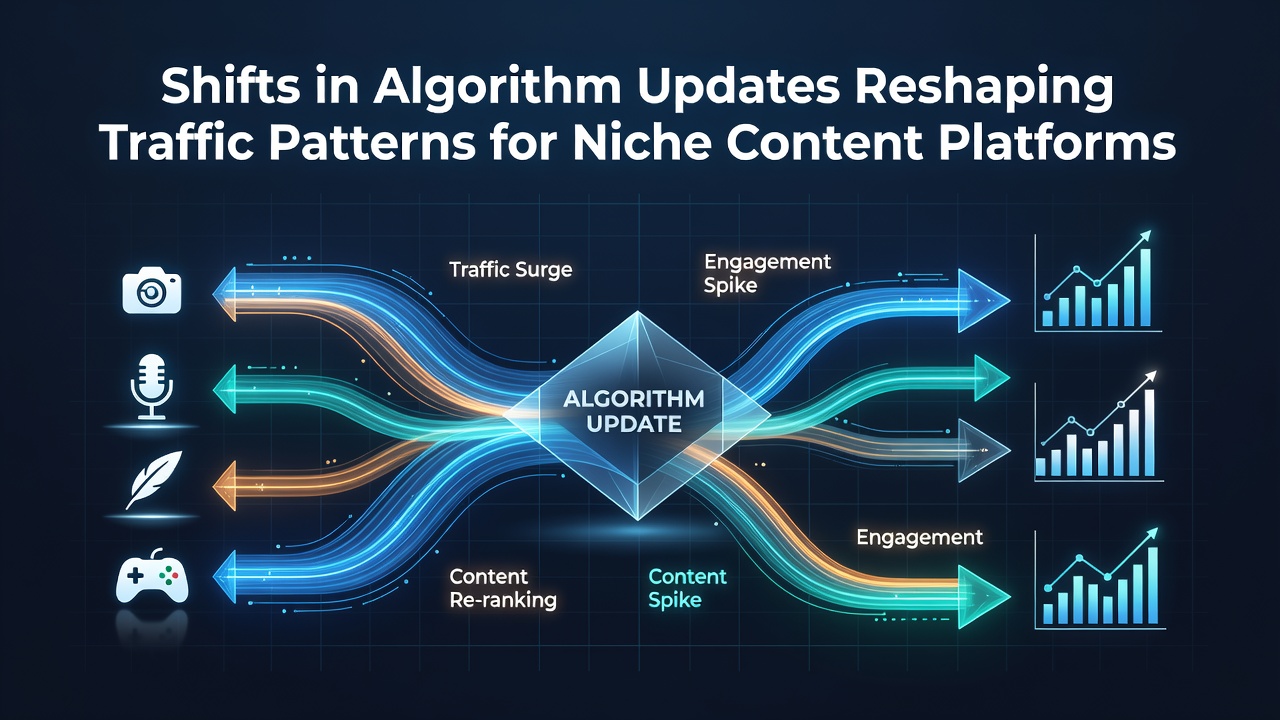
Search engine algorithm modifications have altered how niche content platforms receive visitor flows, with data from multiple monitoring services showing measurable redistribution of organic referrals since the middle of the decade. Platforms focused on specialized topics such as vintage electronics repair, regional folklore archives, and independent game modding communities experienced distinct shifts in session duration and page depth metrics following core system refreshes.
Core Updates and Their Timing
Multiple core updates rolled out between 2024 and 2026 adjusted ranking signals toward demonstrated expertise signals and reduced emphasis on generic topical authority markers, which in turn redirected traffic away from aggregator-style sites toward smaller, single-topic repositories. Observers tracking query-level data noted that long-tail phrases associated with hobbyist forums gained visibility in several verticals while broad category pages on larger domains lost ground.
In September 2026 one additional iteration introduced refined evaluation criteria for user engagement sequences, prompting further adjustments in how niche platforms appeared for queries tied to procedural instructions and community-driven knowledge bases. Those monitoring referral patterns recorded that certain platforms saw referral traffic increase by double-digit percentages within weeks while others in adjacent categories recorded corresponding declines.
Traffic Redistribution Across Platform Types
Niche discussion boards and archival repositories reported higher proportions of direct and bookmark-driven visits after the 2026 adjustments, indicating that users began bypassing intermediate search layers once they identified reliable sources. Data compiled by research teams at several universities showed that platforms maintaining consistent update cadences retained steadier referral volumes compared with those relying on sporadic content additions.
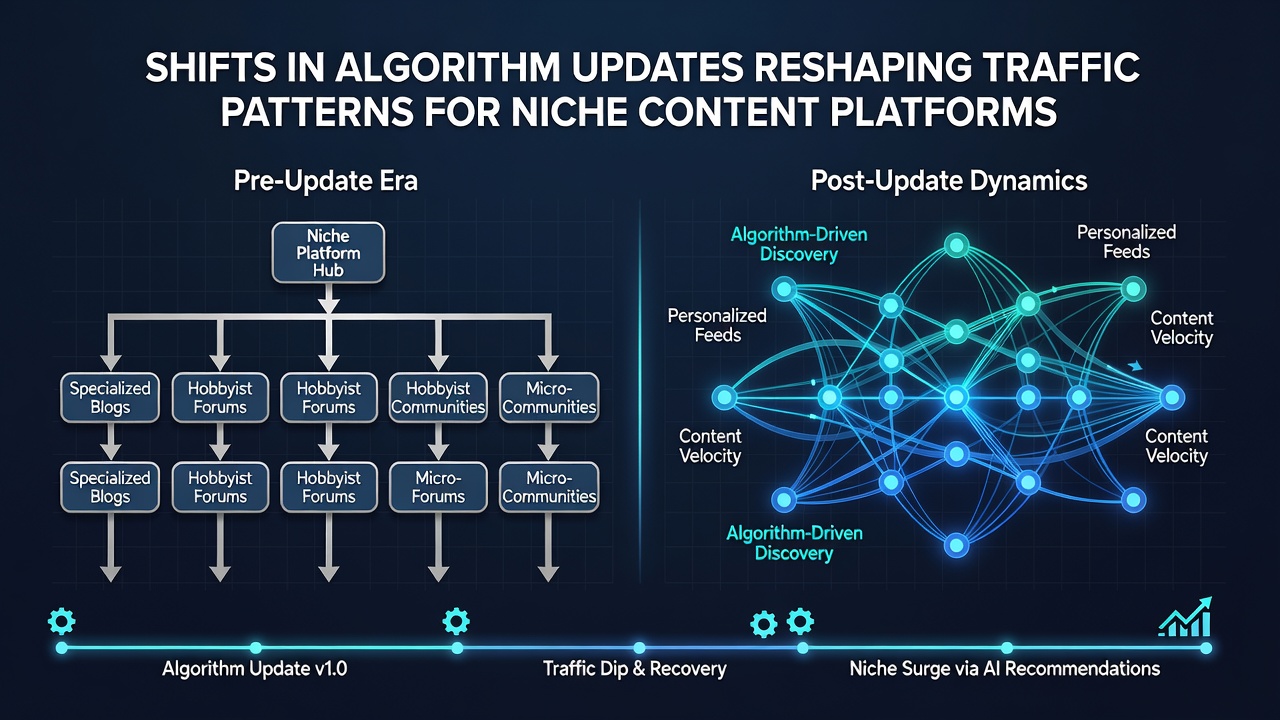
Meanwhile, platforms that aggregate user-generated tutorials observed mixed outcomes, with some verticals losing mobile referral share while desktop sessions held steadier. Industry reports compiled by the Australian Competition and Consumer Commission documented parallel patterns in digital content distribution, noting that smaller operators adapted indexing strategies more rapidly than larger centralized services in certain categories.
Measurement Approaches and Data Sources
Analytics teams at niche platforms began incorporating server-log analysis alongside traditional console data to capture the full scope of crawler behavior changes, because referral reports alone failed to explain sudden drops in indexed page counts. Studies released by academic groups in Canada highlighted that platforms incorporating structured data markup for procedural content experienced faster recovery in organic impressions after each major refresh cycle.
Cross-referencing with European Commission digital platform reports revealed that regulatory tracking of online intermediary traffic also captured similar redistribution trends across member states, confirming that algorithm-driven shifts affected both commercial and non-commercial niche repositories in comparable ways.
Adaptation Patterns Observed
Operators who adjusted internal linking structures to emphasize evergreen procedural guides retained more stable referral volumes than those focused exclusively on timely news-style posts. Platforms that diversified hosting infrastructure and implemented incremental crawl-budget optimizations recorded fewer instances of sudden de-indexing following the September 2026 update.
Those tracking bounce-rate distributions across device categories found that niche platforms emphasizing accessibility features maintained higher return-visit rates even as overall search referral composition changed. Data sets collected by independent monitoring collectives showed that sites integrating community-moderated quality signals aligned more closely with the revised engagement metrics introduced in recent refreshes.
Conclusion
Algorithm refinements continue to redistribute referral traffic among niche content platforms, with measurable effects documented across multiple reporting periods and geographic regions. Platforms that maintain consistent content structures, structured markup, and engagement tracking have demonstrated greater resilience in retaining session quality following each successive update cycle. Continued monitoring of server logs and regional regulatory summaries provides the clearest picture of how these patterns evolve over successive quarters.