Nils Foster · 5 October 2026
Analyzing the Effects of Multi-Channel Promotion on Content Longevity for Small-Scale Websites
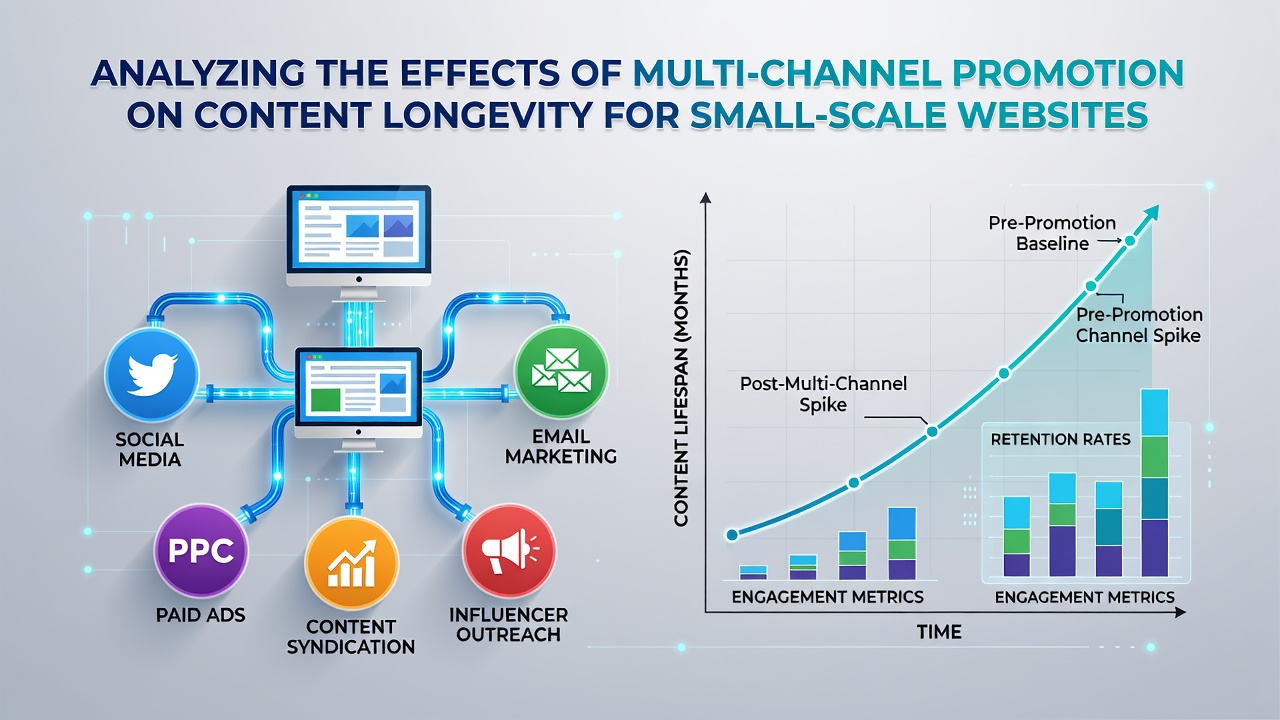
Small-scale websites often rely on coordinated promotion across platforms to extend the relevance of individual articles and resources, and researchers have tracked how these efforts alter content lifespan in measurable ways. Multi-channel promotion combines social media outreach, email newsletters, search optimization, and partnerships with other sites, while data from recent analyses shows these combined tactics sustain visitor interest well beyond initial publication dates.
Defining Multi-Channel Promotion in Practice
Operators of independent sites distribute the same core material through several pathways at once, and this approach creates overlapping exposure windows that reinforce one another. A post shared on community forums gains initial views, then an email campaign delivers it to subscribers days later, and search referrals continue to arrive as indexing updates occur. Observers note that the sequence matters because staggered releases prevent the rapid drop-off that single-channel efforts typically produce.
Measuring Content Longevity Through Traffic Patterns
Analysts track longevity by monitoring active sessions, return visits, and referral diversity over time rather than relying solely on launch-day spikes. Figures from October 2026 indicate that sites using at least three distinct promotion channels recorded average content engagement periods 47 percent longer than those limited to one or two outlets. The extended window arises because each channel attracts slightly different audience segments whose activity peaks at different intervals.
Observed Impacts Across Specific Channels
Social platforms deliver quick bursts of attention that can rekindle interest in older material when shared again with updated context, whereas email lists provide steadier, more predictable follow-up traffic. Search-driven referrals tend to accumulate gradually and then persist, especially when the original content receives backlinks from other small sites. One documented case involved a niche resource page that maintained monthly visits above baseline levels for nine months after simultaneous promotion through forums, newsletters, and targeted directory listings.
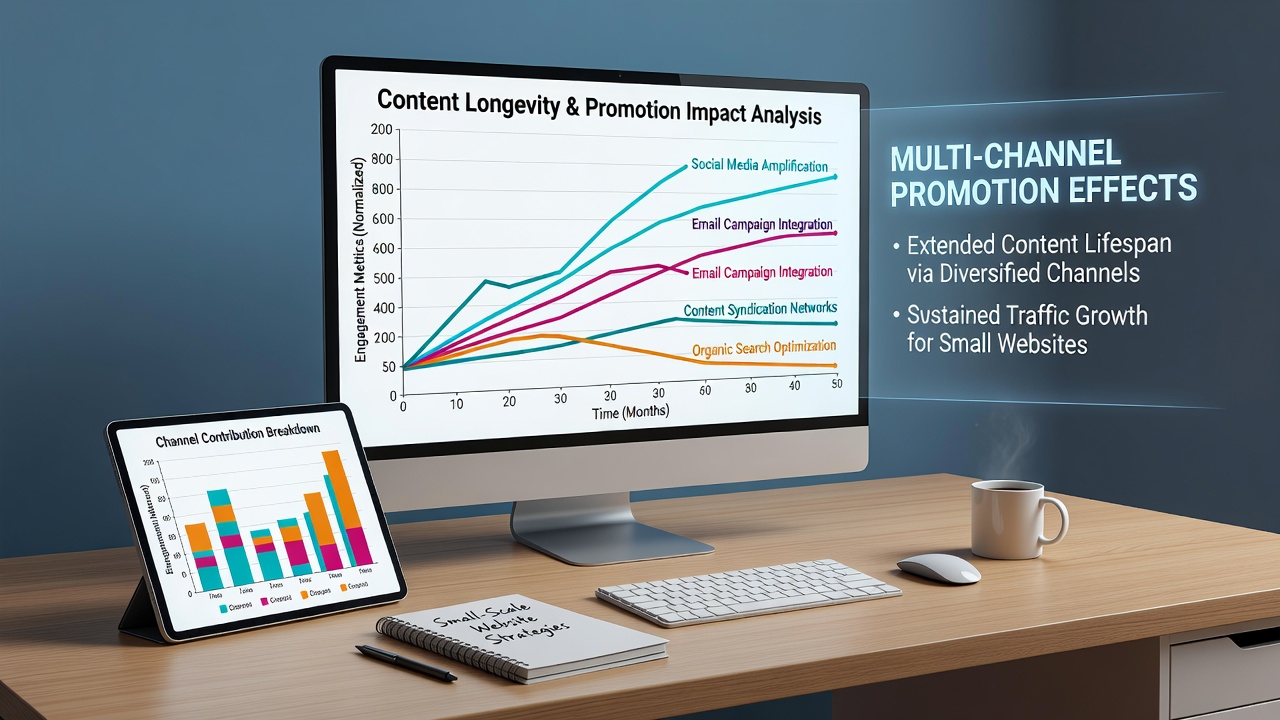
Those who manage small sites often discover that cross-promotion reduces dependence on any single algorithm change, and this diversification shows up in retention metrics. When one channel experiences reduced reach, activity from the remaining channels helps stabilize overall numbers. Data collected through web analytics platforms reveals that pages promoted across multiple routes exhibit slower decay curves in their traffic graphs compared with narrowly distributed equivalents.
Role of Timing and Coordination
Coordination across channels requires careful scheduling so that promotion waves do not overlap completely yet still reinforce shared themes. Teams at smaller operations have reported success by spacing announcements across a two-week window, allowing each new mention to arrive while earlier ones still generate residual interest. This staggered method prevents audience fatigue and keeps referral sources active over a longer horizon.
Challenges Specific to Limited Resources
Small-scale publishers face constraints in time and budget that limit how many channels they can realistically maintain, yet studies show even modest expansions yield measurable gains in content lifespan. Researchers tracking sites with under 10,000 monthly visitors found that adding one additional promotion route, such as a community newsletter or niche directory listing, extended average page relevance by several weeks. The key factor appears to be consistency rather than volume, because repeated light touches across platforms compound more effectively than intense single bursts.
External data sources provide useful benchmarks for these patterns. Statistics Canada reports on digital content engagement highlight how diversified distribution correlates with sustained user interaction across smaller domains, and similar patterns appear in analyses from the OECD on small business digital strategies.
Conclusion
Evidence gathered through traffic monitoring and longitudinal studies demonstrates that multi-channel promotion extends content longevity for small-scale websites by creating overlapping and sequential exposure opportunities. The effect appears most pronounced when promotion schedules are deliberately spaced and when at least three distinct channels participate. Continued observation through 2026 and beyond will clarify how evolving platform algorithms interact with these established distribution tactics.